Plantation and Commodities Minister Datuk Seri Noraini Ahmad said the project will create opportunities for Malaysian small and medium-sized enterprises (SMEs) across biomass supply, logistics, and industrial services, supporting inclusive national growth.
Launch Announcement
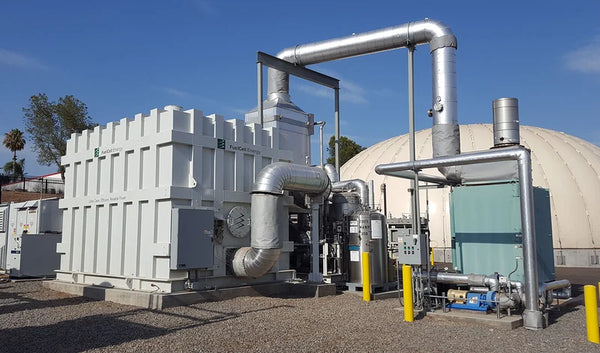
Malaysia on Monday inaugurated its first commercial-scale sustainable aviation fuel (SAF) plant in Tanjung Langsat, reinforcing the country’s leadership in sustainable aviation and the energy transition.
Datuk Seri Noraini Ahmad said the launch aligns with the Malaysia Aviation Decarbonisation Blueprint, which outlines a phased roadmap for reducing carbon emissions in the aviation sector.
Policy Framework
In her opening address at the launch ceremony of EcoCeres’ first SAF plant in Malaysia on Monday, she said: “The blueprint focuses on improving efficiency, strengthening sustainable practices, and promoting sustainable aviation fuel as the future aviation fuel. Under the National Energy Transition Roadmap, an initial 1% SAF blending target is critical to creating demand and supporting market growth.”
Strategic Positioning
She emphasised that EcoCeres Renewable Fuel Sdn Bhd’s SAF plant reflects Malaysia’s strategy of positioning its plantation and commodities sector as a responsible national participant by converting certified waste-based biomass into high-value products.
“This initiative strengthens local supply chains, enhances downstream activities, promotes sustainability and transparency, and reinforces the long-term competitiveness of our plantation and commodities sector,” she said.
Production Capacity
The facility has a licensed annual capacity of 350,000 tonnes and will produce sustainable aviation fuel, renewable diesel, and other advanced bio-based products for domestic use and export.
Economic Benefits
Noraini said the project will create opportunities for Malaysian SMEs in biomass supply, logistics, and industrial services, supporting inclusive national growth. She added that the plant strengthens Malaysia’s position as a leading SAF producer in ASEAN while unlocking the full potential of local biomass resources.
A Broader Vision
The minister stressed that the initiative demonstrates how Malaysia is integrating national policy, economic development, and environmental objectives to build a sustainable, competitive, and low-carbon economy for the future.
Facility Details
EcoCeres began construction of its second biofuel production plant in Johor, Malaysia, in June 2023, with operations commencing in October 2025. The advanced facility covers 105,830 square metres and has a combined annual capacity of 420,000 tonnes of sustainable aviation fuel, hydrogenated vegetable oil, and renewable naphtha.
Malaysia’s SAF Strategy
The launch marks a milestone in Malaysia’s aviation decarbonisation efforts. The 1% SAF blending target under the National Energy Transition Roadmap lays the foundation for market development, while the country continues to build production capacity and supply chains.
Feedstock and Technology
The plant uses certified waste-based biomass as feedstock, converting agricultural and plantation waste into aviation fuel and other renewable products. This approach addresses both waste management and energy transition objectives.
Regional Significance
As ASEAN’s aviation sector continues to expand, demand for sustainable aviation fuel is expected to grow significantly. Malaysia’s early investment in production capacity positions it to capture regional market share while supporting Southeast Asia’s collective decarbonisation commitments.
Supply Chain Development
The project creates opportunities across multiple areas:
Biomass supply: Malaysian SMEs can provide feedstock from plantation and agricultural operations.
Logistics: Transportation and handling services for biomass collection and product distribution.
Industrial services: Maintenance, technical support, and specialised services for biofuel operations.
Technology transfer: Knowledge spillovers as Malaysian firms gain experience in advanced biofuel production.
Export Potential
With an annual capacity of 350,000 tonnes at the current facility and 420,000 tonnes at the second plant, Malaysia will have substantial production capacity beyond domestic demand. These surplus volumes can be exported to regional and international markets where SAF demand is growing but production remains limited.
Sustainability Credentials
The focus on waste-based biomass feedstocks addresses concerns that SAF production could compete with food crops or drive deforestation. By utilising existing waste streams from Malaysia’s extensive plantation sector, the project demonstrates a circular-economy approach to the energy transition.
Competitive Advantages
Malaysia has several advantages in SAF production:
Abundant biomass: Large volumes of waste generated by the palm oil and agricultural sectors.
Geographic location: Proximity to major Asian aviation hubs, reducing transportation costs.
Industrial infrastructure: Existing petrochemical and refining capabilities that support biofuel development.
Policy support: Government frameworks promoting renewable energy and decarbonisation.
Challenges Ahead
Despite the positive launch, challenges remain:
Cost competitiveness: SAF remains significantly more expensive than conventional jet fuel.
Blending mandates: The 1% target is conservative; scaling up will require stronger policy support.
Feedstock sustainability: Ensuring biomass sourcing meets international sustainability standards.
Market development: Building demand among airlines operating in Malaysia.
International certification: Meeting diverse global SAF certification requirements for export markets.
The Road Ahead
Malaysia’s first commercial SAF plant marks the beginning—not the end—of the country’s SAF ambitions. Success will depend on:
Scaling production: Expanding beyond initial facilities to meet growing demand.
Policy evolution: Raising blending mandates and introducing market mechanisms to bridge the cost gap with conventional fuels.
Supply chain maturity: Developing robust and sustainable biomass collection and processing systems.
Regional coordination: Aligning with ASEAN partners on SAF standards and market development.
Technological progress: Adopting emerging production methods to improve efficiency and reduce costs.
For Malaysia, the SAF plant is more than an energy transition project—it is a strategic bet that the plantation and commodities sector can evolve from an extractive industry into a sophisticated, high-value, sustainable manufacturing base.
Whether this vision is realised will depend on execution in the coming years as capacity ramps up and Malaysia’s broader SAF ecosystem takes shape. The launch lays the foundation; sustained commitment and investment will determine whether Malaysia becomes a true regional SAF leader or remains a secondary player in a market led by others.