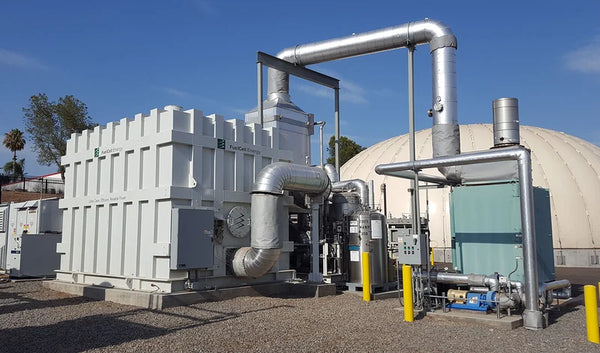
A facility in California is delivering the largest green hydrogen energy storage system in the United States, designed to provide at least 48 hours of electricity during grid outages caused by wildfires or Public Safety Power Shutoff (PSPS) events.
Key Features and Applications
The Calistoga Resiliency Center (CRC) integrates hydrogen fuel cells with lithium-ion batteries to form a hybrid system capable of operating as a microgrid when disconnected from the main grid. With a peak output of 8.5 MW and an energy storage capacity of 293 MWh, the system is designed to deliver sustained power during outages.
When operating in islanded mode, electricity is generated using green hydrogen and fuel cells, while lithium-ion batteries ensure rapid response and system stability. The system produces zero direct carbon emissions and complies with California’s Renewable Portfolio Standard (RPS).
Development and Operations
The CRC is the result of a collaboration between Energy Vault and PG&E. The VaultOS control platform coordinates subsystem operations, enables black-start functionality, supports grid-forming capabilities, and facilitates communication with PG&E’s distribution network.
The project was financed with a total investment of USD 28 million, including proceeds from the sale of investment tax credits. A long-term energy services agreement between PG&E and Energy Vault underpins the project’s commercial viability.
During PSPS events, the system is designed to supply power to downtown Calistoga and approximately 1,600 nearby customers. Black-start capability ensures grid stability until normal utility power is restored.
Impact and Challenges
The project represents a significant milestone for green hydrogen long-duration energy storage (LDES). However, it also highlights several challenges moving forward:
Cost and Financing: The project requires substantial capital investment and relies heavily on tax incentives.
System Complexity: Integrating fuel cells, cryogenic hydrogen storage, lithium-ion battery systems, and advanced control platforms presents considerable technical challenges.
Logistics: Hydrogen production, transportation (often involving cryogenic processes), storage, and handling must be carefully managed to minimize losses and ensure safety.
Scaling and Replication: While the CRC is pioneering, replicating similar systems elsewhere will depend on regulatory support, technological maturity, and cost reductions.
Outlook
Overall, the Calistoga project demonstrates that hybrid hydrogen-based power systems are emerging as a reliable zero-emissions electricity solution—particularly for regions vulnerable to grid disruptions. In wildfire-prone areas and other locations requiring long-duration backup power, this model may serve as a blueprint for future deployment.