Headline
Plug Power Deploys End to End Hydrogen Fuel Cell Ecosystem to Power 77 Unit Material Handling Fleet at Floor & Decor Holdings, Inc. Distribution Centre.
Executive Overview
On October 23 2025, Plug Power announced a significant milestone in its hydrogen ecosystem strategy: the deployment of its GenDrive hydrogen fuel cell systems and GenFuel hydrogen infrastructure at Floor & Decor’s Frederickson, Washington distribution centre. This marks the first time the retailer has used a zero emissions material handling fleet powered entirely by hydrogen fuel cells, underlining Plug Power’s ambition to scale hydrogen solutions across the material handling and logistics sectors.
Project Scope & Key Details
Fleet Deployment — The project powers 77 pieces of material handling equipment at the
Frederickson site using Plug Power’s GenDrive fuel cell systems, highlighting the practical commercialisation
of hydrogen in heavy logistics operations.
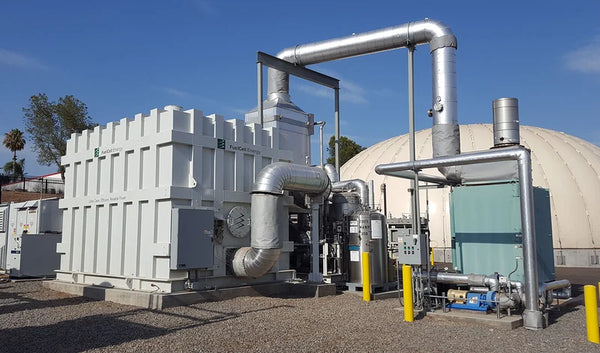
Infrastructure Installation — The hydrogen ecosystem includes a 10,000 gallon liquid
hydrogen storage tank, vaporizers, compressors, and a high capacity dispensing system suitable for high throughput
operations.
Environmental Impact — The company projects avoidance of more than 400 metric tons
of CO₂e per year at this single site, equivalent to the combustion of approximately 45,000 gallons of
gasoline.
By-product Utilisation — The fuel cell system produces only water vapour as a by-product; Floor
& Decor will capture and reuse approximately 300 litres (≈80 gallons) of water per day
for facility operations such as floor scrubbers.
Operational Resilience & Scalability — Plug highlights off-grid capabilities (ensuring
resilience during grid outages) and modular infrastructure that can scale as Floor & Decor expands operations.
Strategic Implications
For Plug Power — This deployment reinforces Plug Power’s leadership in the hydrogen fuel
cell and infrastructure market. The company’s integrated value chain — from production, storage and
delivery through to power generation — is increasingly validated in real world logistics applications.
For the Material Handling & Logistics Industry — The case demonstrates that hydrogen fuel
cells are commercially feasible for large-scale indoor logistics fleets, offering zero emissions and the added
benefit of water by-product reuse. This may trigger broader adoption across warehouses and distribution centres.
For Sustainability & the Energy Transition — Avoiding more than 400 tons of CO₂e
annually at a single distribution centre highlights the emissions reduction potential of hydrogen applications.
The modular, scalable nature of the solution may help organisations meet net-zero targets while maintaining
operational performance.
Challenges & Considerations
Hydrogen Supply & Logistics — The success of the system depends on a reliable supply of
liquid hydrogen and sufficient refuelling and storage infrastructure. Any disruption could directly impact fleet
uptime.
Cost Competitiveness — While the environmental benefits are compelling, hydrogen fuel cell
systems still face cost and infrastructure economics headwinds compared with mature battery or diesel
technologies.
Scalability & Standardisation — Scaling beyond a single site requires replicating storage,
compression, and dispensing infrastructure at multiple locations. Ensuring consistent performance and return on
investment at scale is critical.
Customer Adoption & Behaviour Change — Uptake in logistics will depend on operators’
comfort with fuel cell technology, adequate training for maintenance teams, and the integration of hydrogen
operations into existing supply chain workflows.
Outlook & Next Steps
Plug Power’s success at Floor & Decor’s Frederickson site positions the company to accelerate the
roll-out of hydrogen powered fleets at other distribution and logistics hubs. The project serves as a convincing
reference case that can be leveraged both as a marketing asset and as a technical benchmark.
Going forward, stakeholders should watch:
- How the daily throughput of hydrogen dispensers and fleet utilisation perform under real-world operating conditions;
- Whether Plug Power secures additional large-scale contracts in the material handling sector;
- How cost metrics — such as the cost of hydrogen per kilogram and fuel cell maintenance costs — evolve as more sites go live;
- And how hydrogen fuel cell solutions ultimately compete with battery electric alternatives on total cost of ownership, downtime, and emissions.
Conclusion
In summary, Plug Power’s deployment of its GenDrive and GenFuel hydrogen ecosystem at Floor & Decor’s Frederickson distribution centre is a strong indicator that hydrogen fuel cell technologies are reaching commercial readiness in logistics applications. With 77 units powered, integration of liquid hydrogen infrastructure, significant CO₂e avoidance, and water by-product reuse, the project blends sustainability with operational value.
While challenges around cost and scalability remain, this initiative marks a notable step toward enabling hydrogen to play a meaningful role in the decarbonisation of material handling and logistics operations.