
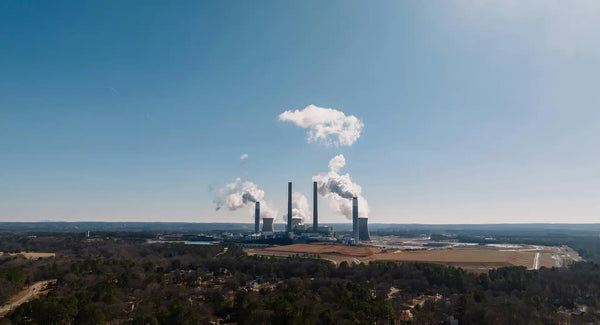
Every day, factory exhaust pipes are releasing hydrogen that could be used again — not consumed, just discarded as waste gas.
How Much Hydrogen Is Actually in That Exhaust?
Imagine drinking one sip from a bottle and then pouring the rest down the drain. That's essentially what many factories do with hydrogen every single day.
In metal heat treatment, semiconductor manufacturing, glass production, and similar processes, hydrogen typically serves as a protective gas — sitting inside furnaces to prevent metal oxidation without participating in the reaction itself. Once the process is complete, that hydrogen gets vented along with other waste gases, burned off, or simply released into the atmosphere. Nobody questions it because it's just "standard procedure." But if you were to analyze those exhaust streams, you'd find that 5% to 70% of the hydrogen is still intact and perfectly reusable.
Why Wasn't It Recovered Before?
It's not that the industry was unaware recovery was possible — it's that recovery used to be genuinely complicated. Waste gas streams contain a mixture of nitrogen, carbon dioxide, water vapor, and other components. Separating hydrogen from all of that once required large-scale equipment, significant capital investment, complex maintenance, and careful attention to safety. For most facilities, the calculus was simple: venting was easier.
That logic made sense in the past, but conditions have shifted. Hydrogen procurement costs are rising, Taiwan's carbon fee policy is now in effect, and the true cost of simply venting is no longer negligible.
How Does H2RENEW Actually Work?
H2RENEW, developed by SKYRE, uses an electrochemical technology called a Proton Exchange Membrane (PEM). The underlying principle is more intuitive than it sounds: the membrane acts like a selective filter that only allows hydrogen to pass through. Waste gas enters the system; hydrogen molecules are driven by an electrical current to become protons, which migrate through the membrane while other gases — nitrogen, carbon dioxide, and so on — are left behind. On the other side, those protons recombine into clean, high-purity hydrogen gas.
What makes this particularly practical is that the process simultaneously handles both separation and compression — no mechanical compressor required. The result is a significantly simpler system with fewer moving parts, lower maintenance demands, and reduced failure risk.
How Flexible Is the Scale?
H2RENEW is built on a modular architecture, which means there's no obligation to commit to full-scale deployment upfront. Facilities can start small, validate recovery performance in their specific process environment, and scale from there.
- Recovered hydrogen purity reaches approximately 99.999%, suitable for direct reuse in process applications
- Scalable from as little as 25 kg/day up to over 1,000 kg/day
- No traditional mechanical compressor required, reducing both footprint and ongoing maintenance
Beyond process reuse, recovered hydrogen can also be stored as a buffer supply or fed into a fuel cell system for on-site power generation — adding meaningful flexibility to how the asset is utilized.
What Changes After Implementation?
- Lower hydrogen procurement costs: On-site recovered hydrogen offsets a portion of external purchases, reducing supply expenditure over time.
- Reduced energy consumption: Electrochemical compression is more energy-efficient than mechanical alternatives, and eliminating the compressor removes a recurring maintenance burden.
- Improved emissions profile: Reducing waste gas discharge directly lowers carbon output — a measurable benefit for ESG reporting and carbon fee calculations.
- Enhanced site safety: Hydrogen is a flammable gas. Fewer exhaust emissions mean a lower risk profile across the facility.
- Greater energy self-sufficiency: Keeping hydrogen in circulation on-site reduces dependence on external supply chains.
Keeping the Hydrogen — That's the Move
The biggest obstacle to hydrogen recovery hasn't been the technology — it's been awareness. Most facilities simply don't know that this is now achievable at a practical scale. H2RENEW lowers the barrier considerably: no large infrastructure, no mechanical compressor, and the option to start with a contained pilot before committing to full deployment.
For Taiwan's manufacturing sector, facing simultaneous pressure from carbon fees, rising energy costs, and ESG accountability, hydrogen recovery addresses all three at once.
If your facility uses hydrogen — whether in heat treatment, semiconductor production, or any other process — contact Tellus Materials to evaluate whether recovery is the right fit.
Post a Comment
Total 0 comments