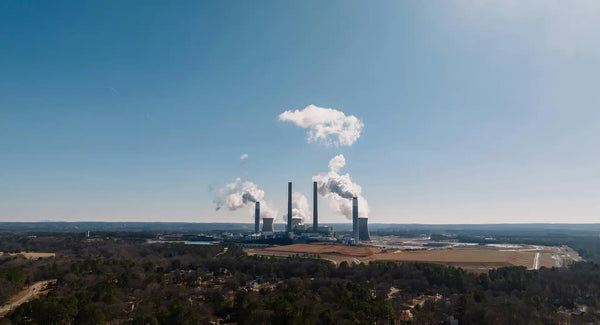
why are different countries making different choices? The answer usually has less to do with technology, and more to do with energy security.
Are there countries still betting on coal? Yes — the two closest examples to Taiwan are the Philippines and Indonesia. The reason is straightforward: access to energy. Put more formally, energy security determines every country's rational energy policy.
The Most Enthusiastic Player: The EU
Currently, no regions are more bullish on hydrogen than the EU and China. From an energy security standpoint, the EU's embrace of hydrogen makes complete sense. Europe has limited control over its own oil and natural gas; it is also the world's leading region for wind power, and with its vast landmass, solar generation is no slouch either. Add in hydropower from the Nordic countries, and Europe's renewable energy foundation sets the stage for hydrogen.
The EU's calculation is simple: use renewables and hydrogen to break free from dependence on oil and natural gas. As far as this author is aware, the EU's hydrogen focus is specifically on sectors that are difficult to electrify.
China: From Coal Exit to Green Hydrogen Exports
China's situation is remarkably similar. China relied on nuclear power to move away from coal; now, with renewables and hydrogen in the mix, China is on track to become an energy exporter once again — only this time, the product won't be coal. It will be green hydrogen or green ammonia.
What are green hydrogen and green ammonia?
Green hydrogen is hydrogen produced using renewable electricity. Green ammonia is ammonia produced from green hydrogen. For countries with insufficient renewable power, producing large quantities of green hydrogen domestically is essentially a non-starter — importing green ammonia is the practical near-term solution, from which hydrogen can then be extracted.
Of course, green hydrogen can be used to produce more than just ammonia. E-fuels — synthetic hydrocarbons — are another development pathway, and news about synthetic gasoline is not hard to find. The obstacle, however, is not the technology itself, but the roadmap for bringing costs down.
The United States: A Sudden Stop
To be fair, the United States has not been absent from hydrogen development. As the first country to use hydrogen fuel cells in space missions, it has long been at the frontier of hydrogen R&D. Just a few years ago, Nel acquired the world's earliest PEM electrolyzer pioneer (Nel itself develops ALK alkaline electrolysis in Norway). After that, hydrogen companies began sprouting up across the US.
Then came Trump's second term, and it all came to an abrupt halt. Today, meaningful hydrogen activity in the US is largely confined to California under Democratic leadership. It all comes back to oil and gas.

The Unexpected Player: The Middle East
As the world's largest oil-producing region, it may come as a surprise that the Middle East is also a hotbed of hydrogen activity. In this author's view, it is pure risk management — a hedging play. Putting a fraction of oil revenues into hydrogen development is likely a rounding error on the balance sheet.
Perhaps in the not-too-distant future, those vast deserts will have another export product to offer: green ammonia.
Key Takeaway
Hydrogen is not purely a technology question. The pace and direction of its development are shaped by each country's energy endowment, geopolitical positioning, and cost calculus. The EU and China are pushing hydrogen because they need to. The US has stepped back because, at least under the current administration, it does not.
Published by the Tellus Materials editorial team. Tellus Materials specializes in hydrogen energy and energy storage solutions, advancing the energy transition in Taiwan and beyond.